Showing posts with label literature. Show all posts

Thursday, February 23, 2012

Freedom At Midnight by Dominique Lapierre and Larry Collins

Here, I am attempting to review a classic historical treatise, which has won acclaim for itself from diverse corners of the world. I feel inadequate. To exacerbate my feeling of inadequacy, the fact that it has been more than a month since I finished this 700 page long book looms large over my head. Still, I have now been infected by this incurable urge of expressing my view about any and every book I read, here, on Nascent Emissions. So this post, essentially, is my 'view', not a 'review' of Freedom At Midnight.

History is not a hailed discipline in our education system. It is pursued by those whom science rejects and commerce repels. Even still, those who brag about their knowledge of historical occurrences do so on the basis of extensive reading of world history- the wars, the revolutions, the socio-economic evolution. I'm not saying there is anything wrong with it, but how many of us are actually aware of the history of India, and I here mean that part of Indian history which has perhaps been pivotal in shaping the landscape of India as we know it today? All of us have a decent idea about the Indian National Movement, the struggle for freedom, the Gandhis, the Nehrus, the Patels, the Partition; but are we really aware of what was it that went into making India one of the world's most successful secular democracies?

Lapierre and Collins, through their characteristic exhaustive research, attempt to answer the above question, and a lot many more. Their research was conducted precisely to recreate the drama and the hysteria surrounding just one event, perhaps the most important in the history of Modern India- that of Independence, concomitant to which was the Partition. The idea that I would be reading about 700 pages delineating just one event, however mammoth its significance, was both, intriguing and putting off. I am glad that intrigue prevailed. This book is not a mere collection of words, or recollection of incidents. This book is a magnum opus. And had it not contained its own set of controversial detailing, it might as well have been an indispensable reading for all students of history in India. For me, it still serves much as an authoritative text. When you go through page after page of tireless details, a certain amount of credibility and an acceptance of the veracity of facts builds up inside you along with respect for the authors for their painful investigation of even the minutest of events surrounding India's independence.

For those not used to Lapierre and Collins' writings- and they do have to their credit other historical works of unquestionable repute, viz, Paris Is Burning and O Jerusalem- the opening chapters of the book can baffle the reader with both, their verbosity and a little over-the-top detailing. However, that is how the authors set the scene. When you revisit events from Indian history via the narration of these authors, you will be certain to feel a thrill and gush of personal emotions even though everything they've written about is a veritable anachronism in the 21st century. Their book is layered with interesting trivia, the most interesting perhaps being the chapter dealing with the lifestyle, the essentially eccentric and amusing lifestyle of Indian Maharajas. Their role in consolidated Indian politics becomes relevant when the independence plan grants them an autonomy to decide which side of the border to join, or to remain independent. More trivia about the division of state property when India was being partitioned can leave you astonished, with anecdotes you would perhaps want to sit over with a coffee and share with your friends.

The book begins with the appointment of Lord Mountbatten as the last Viceroy of India, and goes onto scan in detail many incidents gone unnoticed by famed historians. Particularly interesting are chapters dealing with Cyril Radcliffe's predicament. He was the cartiographer deployed to undertake the surgical division of Indian mainland, the irony being he had never ever visited India prior to this assignment. The bloodbath which preceded and followed partition has been narrated in a manner to leave you shocked and stirred. Marvelous are the portions dealing in an elaborate manner with the assassination of Mahatma Gandhi.

What I personally loved about the book was the theatrics. Many events, including the riots, were not just described, but narrated as a story from the perspective of that one person who could be easily lost in a crowd, but who as an individual was profoundly affected by the same. The story builds up on you, in a way that you understand the magnitude and consequences of events you read as dull parts of draggy history text. The book dithers a bit too much upon the role of Lord Mountbatten, gloriously described, in the pre and post independence times, so much so that you are forced to feel if the authors had a predilection towards him. However, the latter half of the book more than redeems itself with the kind of aura it builds around the person who inhabits the very soul of India- Mahatma Gandhi. Many a book, including his autobiography, have I read about him, but none has made me fall in love and awe of him as much as Freedom At Midnight. The book also paints interesting portraits of Nehru, Jinnah and Patel- the other big players at the fore of the political battleground. And, most importantly, trust me, you really want to read this book to delve into the chilling details of the fanatical plan which was put in place to end Gandhi's haloed sojourn among us mortals.

On a scale of 5, not less than 4and 1/2 stars for me. This is one book we all should read, with a warning, it might just bore you in parts, but at the end of it, you will feel immense satisfaction for having dared to undertake this journey. The following are the protagonists of the saga of independence, and any story which builds on them, along with numerous other faceless characters, can be nothing less than outstandingly thrilling.


Lord Mountbatten
  

Mahatma Gandhi


Jawahar Lal Nehru

 
Mohammad Ali Jinnah

Tuesday, January 24, 2012

Love Quintet

I was asked a few days back by someone to recommend romantic novels which make for a heart warming read. I don't know what all names I blurted out under the assumed pressure of answering quick, but the question stuck by in my head for a decently long time there after. When I answered it for myself, I spotted five romantic books distinctly embedded in my memory which by far have been the best I have stumbled upon. Since romance as a literary genre encompasses a lot, I will specify that what I am about to share with my readers today are 5 of the best 'Love Stories' I have read, which I strongly recommend to you all as well. An important caveat, before I share my favorites, is that my reading habits are not the best around. I mean, I read a lot, but according to some literature aficionados, I read crap. Anyway, I often fall in love with even what is otherwise condemned as crap. So, not sticking to any stereotypes, from a wide variety of sub-genres- here are 5 love stories which conversed straight with my heart and whose essence flowed out through tears in my eyes.


#1 Olivia and Jai by Rebecca Ryman 
Historical Fiction, I guess.
I found this book in a dusty, dingy corner of my college library. Picking it up on instinct, I could never even have imagined what an emotional rigmarole this book had planned to offer me. Set up during the earlier years of British Raj in India, this story, if I remember correctly, is the tale of two lovers haunted by a long history of family rivalries. Olivia, an American tourist in India and Jai Raventhorne, a local born of an Anglo-Indian union have nothing in common save an inherited animosity. However, they find themselves irresistibly drawn to each other and soon their attraction metamorphoses into passion. This passion is not only evident in their love, but also in their actions of vengeance on each other. To see the plot unravel, fluctuating between love, passion, animosity and revenge is a thrilling experience. Someone from you please remind me to read this book again :)


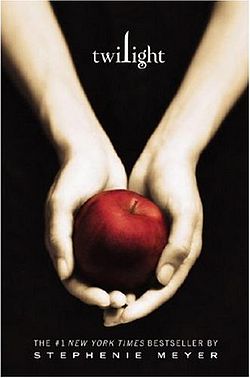
#2 The Twilight Series by Stephenie Meyer
Fantasy fiction- Romantic fiction
Enough had been said and heard about this book. You can look down upon me for all I care, but I am in love with Edward Cullen, as much as I am in love with Bella Swan's character. Stephenie Meyer has constructed a scintillating plot, playing marvelously on an average girl's insecurities and an her dreams of a perfect lover. I have read the whole series twice over, and I will not shy away from burying myself in those familiar pages again when the depression of our 'practical' existence (the practicality even extending to matters of heart) becomes too much to handle.


#3 Wuthering Heights by Emily Bronte
Literary Classic
Need I say anything about this epic love tale which females of all age, around the world have read, and reread and romanticized over and over again? The story of unconsummated passion between Cathy and Heathcliff is a saga in its own self. The narrative of this book is not all flowery, but very dark, almost progressing like a mystery. Perhaps that is why this book was met with censure at first, but over the years has acquired ascendancy among romantic classics. Heathcliff is a character  immortalized in our memory, as that dark and intense hero- capable of passion, and capable of destruction too. Sigh. The wonderful Yorkshire moors. The intense yet unresolved passion. I feel the book is calling me again.


#4 I Too Had A Love Story by Ravinder Singh
Romance
Now, do not judge me for this. I read a lot of new age, commercial Indian literature (if we can call it that), and this book is by far the best I've come across in this genre. Ravin and Khushi, the protagonists of this novel, are the couple next door. The way their love progresses, their sweet murmuring, their first encounters, their brewing passion- everything in this book is painfully relatable. And when you (especially if you are like me) start identifying so much with the incidents and characters in the book, the climax has the potential for leaving you depressed for hours after. I, in fact, found myself wailing. The fact that it is believed to be the author's own story makes the read all the more emotional. Now, the sequel of this story has hit the market. Can Love Happen Twice? I got my copy today. Hell yes I am excited!


#5 Abhijnanashakuntalam by Kalidasa
Sanskrit Classic
Yes, it is an odd inclusion in this list, but for my UPSC preparations, I have gone through most of Sanskrit dramas, prose and poems. 'Erotic' (Shringaar) is the main element of most of the great Sanskrit works, and though I fell in love with a lot of love stories narrated by the likes of Magha, Bana, Bharavi and others, Abhijnanashakuntalam clearly stood out as the most amazing. It is a simple tale of love between King Dushyant and an ashramkanya, Shakuntala. On a hunting expedition, Dushyanta stumbles upon Shakuntala, falls in love, and their love in consummated in a simple Gandharva wedding. Crisis strikes when Dushyanta returns to his Capital City and forgets Shakuntala and their love under the influence of a curse from Rishi Durvasa. Kalidasa weaves a string of some exquisite verses detailing how the two lovers overcome the hurdles created  by Providence's chicanery. Trivia- India, Bharat, is said to have derived its name from Shakuntala and Dushyanta's son- Bharata.

I am all pepped up and reading a lot many books these days. Though I am in a mood for experimenting with different genres at present, I shall return to the trusted romances soon. Just as an concluding thought, I never find a story complete till it does not have an adequate doze of romance in it. A love story, may be as a secondary narrative always does its bit in keeping me hooked onto a novel, no matter which genre it belongs to. Hopefully, I will come up with another list of my favorites, really soon. Till then, keep reading!

Friday, January 6, 2012

Being Elizabeth by Barbara Bradford Taylor- A Review

"Just that....Love won't wait. You have to immediately grab hold of it, hang on to it, when it suddenly appears in all its glory. Yes, you really do, because it certainly has a way of disappearing on you. In fact, you could say it's ephemeral. It evaporates...just like that!"
"You and I certainly grabbed it, didn't we?"

The above is a conversation between Elizabeth Turner and Robert Dunley, the romantic couple who star as the protagonist in another of Barbara Taylor Bradford's family sagas, this time about the Deravenel Dynasty. At the outset itself it must be remarked, that Bradford, OBE, the best selling author of A Woman Of Substance, does not quite live upto her reputation in this book. The author claims at the end of the book that her story is inspired from the life of Elizabeth Tudor, one of England's most dynamic monarchs. However, it is a classic case of how sometimes too much inspiration is bad inspiration. A plot summary might be apt before I sum up my views on the book.

Being Elizabeth is the story the eponymous Elizabeth Deravenel Turner, the last in the line of what has been fictionalized as the oldest conglomerate in the world, the Deravenal Dynasty. In a story that spans a decade, from the mid 1990s transitioning into a new millennium, culminating in the year 2006, Being Elizabeth essays the journey of Elizabeth as the Managing Director of the Deravenel's which she inherits at a tender age and in a devastated condition owing the reckless handling of business operations by Elizabeth's now dead half sister, Mary Turner. Together with her trusted comrades, Cecil Williams and Roberth Dunley, and with the aid of her impeccable business acumen, Elizabeth succeeds in putting back Deravenel's on the path to glory. With the latter gent, Elizabeth has a scandalous romantic involvement since he is an already married man. Having had an abusive childhood, yearning for a single hint of love from her father who married six women, Elizabeth develops a phobia of marriage which becomes the most significant obstacle in the stability of her relation with Robert Dunley. Problems in Elizabeth's life are compounded by constant threats to her sovereign business empire and her claim to the Deravenel inheritance as well.

Being Elizabeth is a story told in a monotone, granting no serious jolts or gasps to the reader. Having read Ms. Bradford extensively, I have figured that one of her peculiar characteristics is that she weaves the crisis into the very fabric of the story. So it lurks around always. As a reader, you keep waiting for that one serious eruption which will set the protagonists life haywire, and then the story will pick up pace. Alas, with Being Elizabeth, nothing like that actually happens.

Bradford spends a lot of time giving vivid description of Edwardian art and architecture, which, unless you are an aficionado, can make things a little draggy. Still, you will but marvel at her for creating that theatrical ambiance in your mind, in which you can easily place the characters and imagine their story. She does her research well, and in this case, since her characters come inspired from real life figures, their development in the story is rather admirable. They are steady and lucid and distinctly identifiable.

Although it would help readers if they have read the previous two installments of the Ravenscar Dynasty, this book would still not rev up the intrigue which makes one want to turn pages. It is predictable. Highly so. The descriptions about imminent family coups, takeover bids, business strategies, and much else, are intelligent and informed, but also lethargically long and repetitive.

For me, the high points of the book, besides Bradford's amazing prowess at writing impeccably beautiful and poetic English, are two. First, she, like always, has for the subject of her book a smart, empowered and a woman in control. You would never find her heroines shedding tears or feeling oppressed. Her heroines always rise above their predicaments, and shine bright. Secondly, I love the love angle in the story. As stated earlier, the love story between the protagonists in this book is inspired by the rumoured affair between Queen Elizabeth Tudor and Robert Dudley, her closest aide, and the first Earl Of Leicester. Bradford does a fine job of carving out an intense, passionate and touching love story, though I find the erotic element a little over emphasized in the book, unnecessarily so.

I would give it a little less than 2 stars on 5, and that for a Barbara Taylor Bradford family saga is a little disappointing.
The Author- From her, you instinctively expect more.


Tuesday, December 20, 2011

The Perfect Bride by Brenda Joyce- A Review

I had no inkling when I bought this book for an unbelievable bargain price of Rs.25 from a shady corner in Janpath flea market that I am going to be in for such a treat. This book, however, surpassing all my expectations took me on a glorious journey of romance and passion, one I am not likely to get over for at least some months to come.

The Perfect Bride is seventh in the sequence of de Warren dynasty books- historical romance penned by the much loved spinner of compelling tales of passion- Brenda Joyce. In the beautiful and flowing language of Joyce, it narrates the love story, of Blanche Harrington and Rex de Warren, a perfect English woman and a damaged war hero. Blanche is a fine, dignified, composed and graceful woman, who ails from a dark past. She has a family fortune to manage, and hence an immediacy to marry and settle down with one of the 228 suitors lined up for her. She, however, has always been smitten by an old family friend, Sir Rex de Warren. On his part Sir Rex is also more than fond of Lady Blanche, but he is the classic de Warren hero- intense, regal, powerful and not easily the emotive one. He, I reiterate, represents the classic hero from English historical romances- he is a recluse, not for once wanting to adhere to or participate in the customs of English polite society. He has a tortured past, a heartache and a lost leg, and he prefers the confines of his estate at all times, abhorring any company except for that of the charming Lady Blanche.

Common friends connive to bring together Blanche and Rex, but the scene of their re-acquaintance is what neither of them could have imagined or wished for. Upon her visit, Blanche finds him in a compromising situation with his maid. He, of course is flushed with awkwardness and embarrassment. But that is where the beauty of their latent love becomes visible. Their fondness for each other is based not on physical attraction or lust, but enormous mutual respect for each other. The forgettable reunion is soon left behind, and a tale of haunting romance is set on course.

However, here is where the flames of Lady Blanche's dark past are reignited. This is the point of 'crisis' in their love story- but this is not the stereotypical impediment you would expect in the way of two lovers who yearn togetherness. 'Sanity', for all you lovers of romance, would not form one of the usual hindrances in the consummation of a love story. Blanche, as we come to know, has been rendered incapable of all emotions following the traumatic death of her mother. She has an unnatural composure; more apt to say that she is simply passionless. Rex de Warren, with his inveigling persona, however, changes that for her. Their growing intimacy leads them to a night of intense passion, following which Blanche's emotions reawaken, and that too with shocking intensity. Her heart, which she deemed was hard as glass, undergoes an admirable thaw under Rex's embrace, but not all for good. Accompanying the new found feeling of love and passion are horrifying memory trips back to the death scene of Blanche's mother. She has episodes of dementia. She shrieks. She's petrified. She discovers that all truth about her mother's death had been concealed from her. She feels she is losing her sanity day by day. And the only way to protect her, she feels is to shut herself from all feelings of love which are beginning to melt her hard acquired equanimity. In a desperate logic acquired from panic, she decides to run away from everything that caused these paroxysms of insanity to ruin her peace- including Rex.

Thus our lovers are torn apart. In the almost velvety narrative, I found myself many a times weeping, many a times frustrated, because more eager than them was I to see Rex and Blanche together. This love story was unique in many ways. The underlying emotion, the desires, the end might remain the same for most mushy romances, but the path this book treads on was definitely not run-of-the-mill. Here we are not talking of love at first sight, or some mundane physical attraction which leads to intensified lust and passion. Here we encounter long sustained, yet dormant feeling of love borne out of remarkable mutual respect between the protagonists. 'Sanity', as I mentioned, as the main conflict in the storyline adds another dimension to the intrigue which compels a reader to keep turning pages. You would, however, want to pause a few times to absorb the beauty of certain heartwarming scenes described unto perfection by the seasoned love ink of Brenda Joyce.

My favorite parts in the book begin after the introduction of the conflict. That is where the narrative acquires pace. And what might touch you most is the point in the book where Rex decides to watch over and take care of Blanche as she battles her terrifying memories, knowing very well that he is the person keeping her away from himself. So, in order to help her, he needs to restrain completely his emotions for her. It is concern, care and selflessness which then helps sustain whatever little love they had experienced in each others embrace.

Sigh. It is a lovely read. A perfect wintry read. Tucked away in your quilt, with moist eyes and a cold red nose, trust me, this is the book you want in your hands even if you're half as much a romantic as I am.

Monday, November 7, 2011

Oh Ridiculous Love!

No. I am not at all attempting to shed my image as a cheesy, hopeless romantic. Nor am I trying to opulently put on display some new found sagacity in matters of the heart, arrived at by some personal bitter experience. I am only amused at something I read. And in the present context of everything happening around me, I find it worth recording on my blog.

What is happening in my life is irrelevant. But largely, suffice to say that love-lorn hearts (including my own) are strewn around me; most with an ache- the others brimming with (transitory) bliss. In this transitional phase in life, transitioning towards maturity, we, inter alia, grow from being a student to a professional, from being carefree to being responsible, from being a dependent to an independent...and alongside, with a presumptuousness we form philosophical perspectives on various aspects of life. One of these perspectives, inevitably, is about love. The grandiloquence of it, or the mere futility of it.

Though my beliefs ascribe to the former category, there was a King in erstwhile times, approximately around the seventh century A.D., who immortalized himself in a single line, perspicuously displaying his disapproval of any heart that ever loved- "Dhik tam cha, taam cha, madanam cha, imaam cha, maam cha." In particular, he displays his disapprobation toward those who are attracted towards others, disregarding and being unfaithful towards their own beloved ones. Story says that Bhartihari, a distinguished scholar and poet, besides being a King, composed a verse after discovering the infidelity of his wife, which approximates in English as-
"She, of whom I think ceaselessly, is indifferent to me, 
She yearns after another man, who himself is attached to a third one,
While some other woman pines away for me,
Fie on that woman, on him, on the God of love, on my wife, and myself!"
(यां चिन्तया सततं मयि सा विरक्ता
साप्यनमिच्छति जनं स जनोन्यसक्तः
अस्मत्कृते च परितुष्यन्ति काचिदन्या
धिक् तां च तं च मदनं च इमां च मां च )
 What the poet alludes to in the above verse is a time tested consternation; I call it time tested because what the poet experienced in his mature years, a lot of my friends are experiencing in their yet young times. The extrapolation of the above line approximates to the poet's feeling that true love in this world in rare. Man tries to locate his happiness in that of his loved ones, and when he discovers them to be unfaithful, he turns wholly averse to the very concept of love. Sounds familiar? It does to me! When people question me (and sometimes when I question myself) about the idealistic nature which we attribute to a feeling as subjective and formless as love, at times I have no answer but just a smile which seeks to convey an incorrigible belief in the truth of this feeling. Sometimes that smile is to check within myself if the belief/faith is still there. May be according to the poet above, true love can exist only if it satisfies a condition of double coincidence of desires; which are not as rare in the present world as would be in a barter economy. May  be I hold consonance with this thought. But may be I don't.

I only seek to shy away questions of how and why which tirelessly attempt to generalize the wonder that love is. Unfortunate is the fact is that that people start generalizing the notions of love only after they think they've been scathed by it. So, a lot of times, they don't generalize, but demonize it- curse whom they once loved, curse the feeling itself. I know things get harsh and hard sometimes, but they are always meant to. This one thought should never be lost sight of. There stands no example of an enduring tale of love which has not been tested amid the worst of circumstances. It stand tall if it survived the test, and it crumbled if it could not. The fact also is that it crumbles only to give way to something more worthy in its place. 

This might sound like an overtly optimistic thinking; but I do not know a better way of living. I, from whatever I have learnt in life, will always avoid generalizing love. I usually believe in love stories which propagate the love is forever doctrine, in the most convincing way; but have also caught myself sometimes philosophizing about it having an organic character - something that lives, breathes and has a life span. The eternity is then justified as something sublime, which ends with the people in love, but ends for sure. Love sometimes is a strength, the other times the biggest weakness of a person. A firm believer in love is only once in a lifetime dogma, I have often urged, and encouraged people to move on; and have even witnessed perfectly successful love stories emanate out of the second or even the third tryst of love for some people. Holding on and letting go are both contradicting essentials for knowing and experiencing love. There is a lot which is ideal about love, nothing that can be idealized about it. Our best bet is to live it while it lasts. To hold on till we can. To be happy, and spread the smiles. Thereafter, if ill omens do manifest, faith will lead you on. And if it does not, you should know that you have to let go. Love is a feeling to make your life beautiful and worth living; not to turn it into a grotesque painting with all the wrong colors at all the wrong places. And if the latter is what you feel has happened with you, did you not know that the artist capable of redrawing the painting resides very much within you?


PS- If you read through till here, and you liked even a little of what you read, and you are a person in love, and you are slow-and-not-so-expressive, take this at the perfect opportunity of letting someone know, in may be a little sentence that he/she is special to you. Trust me, it might mean the world to someone. Even if it is just a friend, sometimes you simply need let people know.


Monday, September 5, 2011

Enlightenment- Beyond The Ramayana and The Mahabharata

उपमा कालीदासस्य भरवेः अर्थगौरवं
दण्डिनः पदलालित्यं माघे सन्ति त्रयो गुणाः 

From this Shloka (श्लोक) begins my much looked forward to journey in the resplendent world of Samskrit Literature. Aah! Pleasures galore.

Not since today, but since forever, I have wanted to more than take a peek into the stories- historical and mythical- written by the preeminent scholars of the most ancient among all languages spread over the SaptaSindhu- more commonly recognizable as the Aaryan India- संस्कृत. I did, to some extent, quench this desire by reading quite majestic English translations of the most common Samskrit epics- The Ramayana and the Mahabharata (and the Bhagavad Gita), along with the not so great translations of other exquisite pieces of Samskrit literature; but now, and for the past weeks, I am reading pieces of literary genius, in the language of the vidvaans themselves. And it is proving to be nothing short of an experience lending ecstasy at every bend and corner I encounter in this journey through the greatest of Samskrit works.

The above Shloka has been composed by an anonymous scholar, who, adhering to the most basic of poetic meters, has stated in succinct precision the most renowned of literary traits of four Samskrit poets of unparalleled accomplishments- कालीदास, भारवि, दण्डी, and माघ.
Kaalidasa- Upama Kaalidasasya
Hailed as the 'Kavikulguru', the above shloka points out to the mastery of Kaalidasa at weaving the most beautiful similes in his poems. His similes, the genius at comparing and contrasting and drawing parallels, lends a perspicacity to his poems, which makes the thoughts of the poet effortlessly enter the mind of his readers. Raghuvamsa and Kumarsambhavam are two easy testimonies to his glorious similes.

Bharavi- Bhaarave Arthgauravam
Bharavi has been accredited with writing few of the most poetically  beautifully verses, which are rich in both- beauty of language, and beauty of meaning. The above shloka specifically points out to the arthagaurav- his ability to express a plethora of meanings in the least possible words; in other words- the depth of words. While sifting through his Kiratarjuniyam, some of his verses virtually left me stunned, but this shall be the topic of one of my later writings.

Dandi- Dandinah Padlaalityam
I have not yet read any of Dandi's works so commenting this line would be difficult- but padlaalityam in basic terms implies the beauty as represented in the arrangement of words in his prose. Of his most famous creations in Dashkumarcharitam, which I happen to be reading at present.

Maagh- Maaghe santi trayo gunah
As remarked by certain scholars, Maagh was perhaps the most accomplished of all kavis, as far as the beauty of his compositions if concerned. This is concurred by the anonymous composer of the shloka under discussion, who grants the climax of his shloka to Maagh, stating that the Great kavi Maagh has all three of the discussed qualities- upama, arthgauravam, and padlaalityam.

Not much is available about these poets on the internet, but I guess it is a blessing in disguise for a seeker of literary treasures, like me. I was driven towards more authentic sources to aid my learning, and in my quest, I am being guided by the ablest of mentors available- my mother- one of the best Samskrit teachers in Delhi. Her zeal to teach makes me want to learn faster.

PS- The last piece of gyaan bestowed on me today is whether they write prose or poetry, the writers in Samskrit are addressed as 'Kavi'- गद्यकवि (Gadyakavi)  and पद्कवि (Padkavi)


Sunday, September 12, 2010

Five Must Reads!

I am no connoisseur of literature. I am just an hapless addict, who is forever beguiled by the rich, commanding, resplendent world that books (novels in particular) offer. My own cute way of referring to the books is not to call them 'my best friends', rather, 'my intoxicants', the only ones capable of elevating me above my surroundings, and drawing me into another galaxy. Mentioned below are five books from my own mini library, which according to me are a must read for every single person belonging to my environment. A curious fact about these books is that they are all authored by Indians, but then, that is how I am prejudiced as far as literature is concerned.


1. 'My Experiments With Truth' by Mohandas Karamchand Gandhi Every Indian, irrespective of caste, creed, age, religion must read this book. It is, for me, one of those books which can be termed as a life changer (and has proven to be for a few people I know). The lesser said about this book, the better, but I would advise everyone to at least attempt to take a peek into the life of that man, who has veritably contributed the most in the making of modern, Independent India.


2. 'Train To Pakistan' by Khushwant Singh
 In my view, Khushwant Singh is the greatest storyteller ever to have been born on the soil of India. His first novel, the Train to Pakistan makes nothing short of an compelling, invigorating, and satisfying read. With one of the most vivid and poignant portrayals of India's bloodbath during partition, this book is written such that at no point will the reader feel detached from the narrative; rather, if the reader is like me, he would end up crying more than once, for the pangs of partition would be too much to bear even for him.


3. 'The Broken Nest'/ 'The Home and The World' by Rabindranath TagoreI've always rued the fact that I can't read Bengali, for Bengali literature is touted as one of the finest and richest in India; but thanks to the translations, I've been able to go through the writings of someone who should ideally be called the Father of Modern Indian Literature - Rabindranath Tagore. These two books make for an excellent starter if you want to delve into the wealth of Bangla literature


4. 'Our Trees Still Grow In Dehra and other stories' by Ruskin Bond         
He is an author for all seasons, for all ages. He looks at India the way no Indian can. He can make you feel attached to the Indian soil the way you yourself might never be able to. The magic of this collection of short stories can be felt only if you read them; my only guarantee would be that Mr. Ruskin Bond absolutely does not know how to leave his readers dissatisfied.


5. 'Ramayana'/ 'Mahabharata' by C. Rajagopalachari
 Although attributed to their original authors, Valmiki and Ved Vyasa respectively, the Ramayana and the Mahabharata have many versions in different languages of India. This version, published by Bhavan's books, has been penned down by Rajaji, the first Indian Governor General of independent India, and has been written in a style that despite assimilating the facts of all the different versions, is striking in its originality and beauty.

The Immortals of Meluha- A Review

Who is God? It is not often that I ponder over a question like this. It was especially not until I lay my hands on this one-of-its kind book, called The Immortals of Meluha, authored by Amish. A book that borrows heavily from the royal pages of Indian mythology, The Immortals of Meluha weaves together myths and legends and modern sensibilities with remarkable ease.


The book cover was immediately intriguing- the back of the mighty Shiva, with deep scars over a shoulder and an arm; long, majestic tresses falling over his back; a trident elegantly positioned at the very centre of his form; and the backdrop comprising of Indus and the magnificent Mountains of the North. This was easily a book I would have wanted to read, and as it did turn out, it was a book I simply could not keep down once I started on. The first of a series of three (called the Shiva Trilogy), this book tells the story of Shiva, the Destroyer, a much hailed and praised God from the Hindu Trinity of Brahma-Vishnu-Mahesh. One of the boldest attempts in the Indian fantasy fiction genres, this book lays down the hypothesis that Shiva was never actually a God. More so, he did not even belong to India (the Saptasindhu, as mentioned in the book). Blasphemy you would say, but so long as we consider this book to remain within the realm of fiction, it is actually amazing how the author has carved out a story with Shiva as a War Hero, firmly supported by accurate facts and descriptions, giving strong evidence of the author's deep knowledge and research of the subject.


The book is set in the Indus Valley Civilization, referred in this book as Meluha (It was only later that my History teacher informed me about the Indus Valley Civilization being called as 'Meluha' by the Sumerians and the Mesopotamians). This civilization was one of the finest the world has ever been testimony to, and is often hailed as the birthplace of men of greatness, because the things they did have not been imitated anywhere, anytime in the world. Before beginning the book, the author makes three claims, the fundamental premise on which his book is based-

I believe that the Hindu gods were not mythical beings or a figment of a rich imagination.
I believe that they were creatures of flesh and blood, like you and me.
I believe that they achieved godhood through their karma, their deeds.
The story begins with an elaborate depiction of Shiva, who is not a God, not even an extraordinary human, but the head of a simple tribe of cattle herders, somewhere in the foot of the Himalayas, ridden with fatigue due to incessant struggles for existence being fought with the other tribes. His assistant, comrade and best pal, curiously, is a fellow tribesman called Nandi. Due to the course of events, Shiva and his tribe migrate to Meluha, the land of Suryavanshis, the descendants of the illustrious Lord Rama. The land of the Suryavanshis is plagued with many evils, and is under threat from the opposite race, the Chandravanshis. To add to their already cup-full of woes, the Chandravanshis have employed the despicable, sinister Nagas, an ostracized caste, to spread terror in the land of Meluhans.


It is from these terrors that the Meluhans seek respite. According to the Meluhan legend, it will be 'Neelkanth', the one whose neck will turn blue on drinking their nectar, Somaras, who will be their Savior. Thus is defined the character and course of the protagonist, Shiva, who after drinking the Somaras is hailed by the hapless people as their Lord, the one who will alleviate all evils from their land. What then ensues is the journey of Shiva through the land of Meluhans, during which, he establishes himself as a warrior of unparalleled might and war skills. At most places during the narrative, Shiva is shown to be spellbound by the superior technology and infrastructure possessed by the inhabitants of the magnificent land of Meluha. Also, as an undercurrent, laced into the narrative is the love story of our indomitable hero and the demure, chaste and skilled Parvati, incidentally the daughter of Maharaja Dasya, King of Meluha.


The narrative of the story is contemporary, not in the least archaic, as one would expect the tone of any of our mythological tales to be. This book attempts to clear the mist around the concept of Mahadev we have grown up with. While reading about this book, I came across interesting facts, such as, long back, in the ancient times, there was no concept of India. The only concept then that has left its traces to be felt in the contemporary times is that of the Aryans, the greatest race on the Earth. What is particularly curious about Shiva is that he is the only non-Aryan entity in the Trinity of Hindu Gods. In the book too, he conforms to what have been his features otherwise- easy to please, free of deceit and trickery (Bholenath), unabashed in his display of emotions (anger in particular- Tandav), passionate lover, substance addiction...and the list can go on.


To conclude my assessment of the book, I can say, it was a compelling read. It was not anything like the other tales of our three crore plus Gods and Goddesses I have read or heard about. Very few authors have touched this particular genre with such marvellous ease, making the reader more and more intrigued by the vivid and precise description of the events which form this story. Worthy of not less than four stars on five, it is one of those books which all of us should pick up, especially if we feel detached from our rich mythological heritage, with a promise that if one begins with this book, he would only be lured deeper and deeper into the mystical world of our tales and legends and myths. Highly recommended!